


The landscape of B2B sales is undergoing a seismic shift, propelled by rapid technological advancements and evolving buyer expectations. Several key trends are emerging that will redefine how businesses connect with and sell to each other in the years ahead.
From the pervasive influence of artificial intelligence and the critical importance of hyper-personalization to the strategic adoption of hybrid sales models and the increasing reliance on data-driven insights, understanding and adapting to these changes will be paramount for organizations striving for success in the dynamic B2B marketplace.
This article will delve into the top B2B sales trends shaping the future, providing actionable insights for businesses to not only survive but thrive in this new era of commerce.
Overview
- 1. Omnichannel Presence Makes or Breaks Sales
- 2. Design Your Sales Process Around Your Customers
- 3. Focus on Customer Experience
- 4. Buyers Want Self-Service Options
- 5. Increasing Use of Sales Artificial intelligence (AI) Tools and Sales Automation
- 6. Account-Based Marketing Boosts Sales & Keeps Costs Down
- 7. Build Stronger Teams with Regular Sales Coaching
- 8. Hybrid Sales: Balancing Remote and In-Person
- 9. Use Social Selling to Your Advantage
- 10. Efficient Video Conferencing Is Essential
- 11. More Virtual Sales Reps
- 12. Digital Sales Rooms Rise Up
- 13. Risk Management in Sales Strategy
- 14. Content is King
1. Omnichannel Presence Makes or Breaks Sales
Your buyers’ preferences are everything. Yet, with B2B Sales, keeping up with what your buyers want is tricky. That’s because, unlike in real life, your B2B client can enter the sales funnel at any point in the digital world.
To make it worse, they can also enter the funnel using any channels you are present on. For example, some customers prefer to view videos, while others are more interested in blog posts, ebooks, or visual presentations.
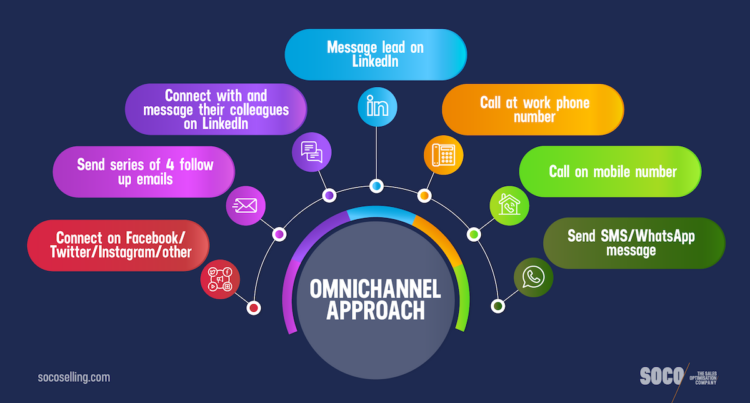
Overall, the average customer has become more unpredictable and uses various channels to research a solution. So you should respond by increasing the number of digital touchpoints with your prospects to catch them everywhere.
However, be warned. Another key B2B sales trend is that customers have become more impatient with customer service. About 90%* consider immediate responses to their questions a deciding factor when purchasing. So ensure you can reply quickly when customers do get in touch with you!
Also read: How To Generate More Leads In Uncertain Times
2. Design Your Sales Process Around Your Customers
One significant B2B sales trend this year is adopting Customer-Centric Selling strategies. Especially suitable for companies that want to stay relevant, engaging, and afloat. That’s why many are adopting approaches that personalize the customers’ journey at every pipeline stage.
Modern B2B buyers now expect sales experiences tailored specifically to their needs, challenges, and industry context. Companies are responding by using advanced data analytics to understand their customers more deeply – from their browsing patterns to their engagement preferences and past purchasing behaviors.
This deep understanding allows sales teams to create highly customized interactions. For example, sending industry-specific case studies right when a prospect shows interest, or adjusting communication styles based on the buyer’s previous responses. Sales teams now craft personalized value propositions that speak directly to each account’s specific pain points and goals.
The technology supporting this approach has grown more sophisticated. CRM systems now track and analyze countless data points about each account, helping sales teams time their outreach perfectly and choose the most effective channels for each customer. What worked well for one manufacturing client might need a completely different approach for a retail prospect.
This focused attention on individual customer needs builds stronger relationships and typically leads to higher conversion rates and long-term partnerships. When customers feel truly understood, they’re more likely to view you as a trusted advisor rather than just another vendor.
3. Focus on Customer Experience
You might already know that acquiring one new customer is often anywhere from 5x to 25x more expensive than retaining an existing one. With this fact alone, it’s easy to understand why B2B sales teams need to start viewing customer success from the lens of generating revenue.
Instead of mistakenly considering it a costly, time-consuming expense especially when we know B2B sales cycles are usually long and involve multiple decision-makers.
That’s where customer success comes in. While sure, your company must have exceptional sales and marketing to be successful. It isn’t enough to sustain growth in a buyer-first, digital-forward world where customers have endless options and information at their fingertips.
Investing in customer success and having a genuine interest in helping customers succeed in every interaction. They will become your biggest advocates, helping reduce churn rates, improve renewal and satisfaction, and boost revenue.
4. Buyers Want Self-Service Options
90% of B2B customers start their B2B buying journey with an online search. So it’s clear to say that, in this digital-first world, buyers prefer to self-serve. They want to research the solution to their problems online rather than having face-to-face interactions with sales reps.
More so, it’s predicted that by 2025, 80% of B2B sales interactions between suppliers and buyers will occur in digital channels. To compete and succeed with digital self-service, your customer portal must provide your customers with a personalized ordering process.
Alongside this, having the ability to personalize offers, promotions, prices, and payment terms can help to up-sell and cross-sell products. As well as encourage product trials and increase basket size, which ultimately all adds up to more revenue.
5. Increasing Use of Sales Artificial intelligence (AI) Tools and Sales Automation
AI and automation are reshaping how B2B sales teams operate today. Sales teams are using AI-powered tools to handle time-consuming tasks like data entry, meeting scheduling, and initial prospect outreach. This gives sales professionals more time to focus on what they do best – building relationships and closing deals.
Smart CRM systems now offer predictive analytics that helps sales teams identify which leads are most likely to convert, while automated email sequences maintain consistent communication with prospects.
Sales enablement platforms are becoming central hubs where teams can quickly access the right content, training materials, and sales collateral exactly when needed.
For example, conversation intelligence tools can analyze sales calls in real time, providing insights about customer sentiment and highlighting key discussion points. These insights help sales managers provide targeted coaching and help representatives improve their performance.
The combination of AI and automation also helps maintain accurate sales forecasting and pipeline management. By analyzing historical data and current trends, these tools provide reliable predictions about deal outcomes and help sales leaders make informed decisions about resource allocation.
6. Account-Based Marketing Boosts Sales & Keeps Costs Down
Account-based marketing (ABM) is a marketing tactic focusing primarily on a group of target accounts within a particular market. The purpose behind ABM is to plan and engage different accounts with personalized campaigns and messaging.
The key to making ABM successful is ensuring proper alignment between an organization’s sales and marketing teams and ensuring that both teams align with common goals.
As the sales and marketing teams target the same prospects and send out the same messaging, closing deals will become much more manageable.
Account-based marketing is one of the key trends in B2B because most large target accounts involve several decision-makers. We all know this often slows down the sales process and makes the prospect less likely to convert. But with account-based marketing, your marketing team can immediately hone in on the primary decision-maker. Helping to significantly speed up the sales process and your overall chance of making a sale.

You must first target your marketing towards your target account list to achieve the benefits. A process involving implementing content strategies that help prospects move through the sales funnel. Again, this approach to lead generation includes personalized messaging and data collection, which will ultimately help sales reps lead conversations to closed deals.
While this sounds like hard work, many of these tasks can be carried out automatically by connecting to your CRM.
Also read:
- The B2B Buying Process Explained: 9 Influencing Stages & Factors
- What is a Digital Sales Room? The Future of B2B Sales
- 7 Effective Sales Training Techniques All Managers Should Be Using
7. Build Stronger Teams with Regular Sales Coaching
In general, B2B sales are advanced. Sales reps now have to understand, navigate, and meet clients’ demands with complex products. At the same time, balancing the effects of the buying process is shifting its control towards customers.
As a result, now more than ever, reps need to be hitting the ground running, and the only way to do that is through regular sales coaching.
When you provide effective sales coaching, team members become more autonomous and self-sufficient—ultimately empowering the individual to take ownership of the necessary actions. This approach makes them more likely to do it and be happy with the result. After all, no one likes to be told what to do.
Overall, regular coaching using one of the most popular coaching models is one of the most powerful tools managers have at their disposal.

8. Hybrid Sales: Balancing Remote and In-Person
Unpredictable and successive COVID restrictions and subsequent lockdowns in the past have made many realize they can still function without a physical work location.
While pandemic restrictions have eased, companies are finding their sweet spot between remote flexibility and face-to-face collaboration.
Sales teams discovered they could maintain relationships virtually, but they’ve also recognized the unique value of in-person interactions.
Many organizations now adopt a balanced approach that combines the best of both worlds.
This hybrid model offers several advantages:
- Sales teams can work remotely when focusing on individual tasks like proposal writing and follow-ups
- Physical offices serve as collaboration hubs for strategy sessions and team training
- Face-to-face meetings with key clients build stronger relationships
- Regional offices provide local presence while reducing overall real estate costs
- Teams can recruit talent regardless of location while maintaining company culture
Successful organizations create environments where teams can work effectively in both settings. Companies are redesigning their workspaces to support this flexibility, with meeting areas for client presentations, collaboration spaces for team sessions, and quiet zones for focused work.
9. Use Social Selling to Your Advantage
Social Selling isn’t new by any means. Yet, if your company still isn’t online, engaging with customers, and generally inhabiting the market, customers won’t recognize you as a brand they can trust. When they come to purchase a similar product or service, they won’t choose your company.
LinkedIn has become the go-to platform for B2B social selling. With over 900 million professionals actively using the platform, it offers unique opportunities to connect with decision-makers and build meaningful business relationships.
Sales professionals use LinkedIn to research prospects, understand their business challenges, and identify mutual connections that could help start conversations.
The platform’s advanced search features help sales teams find exactly the right people to connect with, while LinkedIn Sales Navigator provides deeper insights into prospects and companies.
Regular engagement through thoughtful comments, sharing industry insights, and participating in relevant group discussions help build credibility before any sales conversation begins.
Many successful B2B sales professionals now dedicate time each day to LinkedIn activities – from sharing their expertise through posts and articles to engaging with potential customers’ content. This consistent presence keeps them top-of-mind when prospects are ready to make purchasing decisions.
Through LinkedIn, sales teams can also track important changes in target accounts, like role changes or company expansions, creating natural opportunities for outreach. The platform’s messaging features allow for professional, non-intrusive initial contact that feels more natural than cold calls or emails.
So for this B2B sales trend, you must remember that proper brand awareness and recognition go a long way. To achieve this, ensure you’re applying Social Selling best practices and gradually warm up your prospects. Always post valuable content, showcase your expertise in online groups, and answer people’s burning questions.
10. Efficient Video Conferencing Is Essential
With the rise of remote and virtual selling, video conferencing has become a key tool for success. So much so that 3 out of 4 B2B buyers prefer online video meetings over audio or phone.
That’s because sales presentations, customer support, and account management need an alternative to traditional face-to-face interactions. Furthermore, incorporating persuasive storytelling is doable even in a virtual setting.
As such, businesses should be working towards developing intimate, personalized interactions by using video conferencing software effectively.
Just remember, the little things will make you look much more professional on your next video call. Here are our top tips to look great on video calls. Whether it’s a virtual meeting with a prospect, a team meeting, delivering virtual training or doing a video interview:
11. More Virtual Sales Reps
With buyers rapidly adapting to their new normal, the need for sales reps to adapt also increases. More so, the acceleration of omnichannel interactions has seen the need for virtual sales reps who can liaise with customers wherever they are. For example, with the help of phone, chatbot apps, and video conferencing.
Why does this matter? Well, if we consider a recent study from a big group of B2B buyers. It shows that 73% of participants who make the last decision are millennials, and more than half of them are sole B2B Decision-Makers. (HBR)

So while in-person sales will likely not disappear, you need to be able to meet customer expectations wherever they are and make remote interactions as intimate as in-person experiences to be successful.
12. Digital Sales Rooms Rise Up
Digital Sales Rooms (DSRs) are secure, shared online customer-facing content portals where sellers display essential sales collateral to enhance their interactions with prospects and stakeholders.
In simple terms, a shared virtual space where sellers and buyers can meet, communicate and make sales with remote customers. The DSR works as a living, interactive resource, creating a streamlined and convenient purchasing experience within a secure microsite.
The future of B2B sales is buyer-centric and becoming increasingly remote. According to research by McKinsey, 70% of business decision-makers are open to self-serve or making remote purchases over $50,000.
At the same time, 27% would spend more than $500,000. This stance is solidified by the fact that in most cases, a buyer has already had 27 information-gathering interactions before talking to a salesperson.
As a result, only about 20% of B2B buyers say they hope to return to in-person sales. What does this mean for sales teams? Well, now, more than ever, we have to change how we sell to suit buyers’ needs. Taking this approach to improving sales engagement with a digital sales room has several key benefits.
13. Risk Management in Sales Strategy
Smart risk assessment has become critical for sales teams navigating today’s market conditions. Sales professionals now need to look beyond just closing deals – they need to spot potential red flags early in their prospecting process.
Many sales teams are adopting systematic approaches to evaluate prospect stability. They check company financials, payment history, and market position before investing significant time in opportunities. This careful screening helps protect both the sales pipeline and company resources.
Financial data analysis tools now make it easier to assess customer creditworthiness and payment reliability. Sales teams can quickly check a prospect’s credit ratings, payment patterns, and financial statements. This information helps them prioritize stable accounts and adjust payment terms when needed.
Sales managers are also training their teams to spot early warning signs during sales conversations. For example, hesitation about sharing basic financial information or unclear decision-making processes might signal potential risks. When these signs appear, teams can adjust their approach or reallocate resources to more promising opportunities.
Building strong relationships with the finance department has become crucial too. Regular communication between sales and finance teams helps create balanced strategies that drive growth while maintaining financial security.
14. Content is King
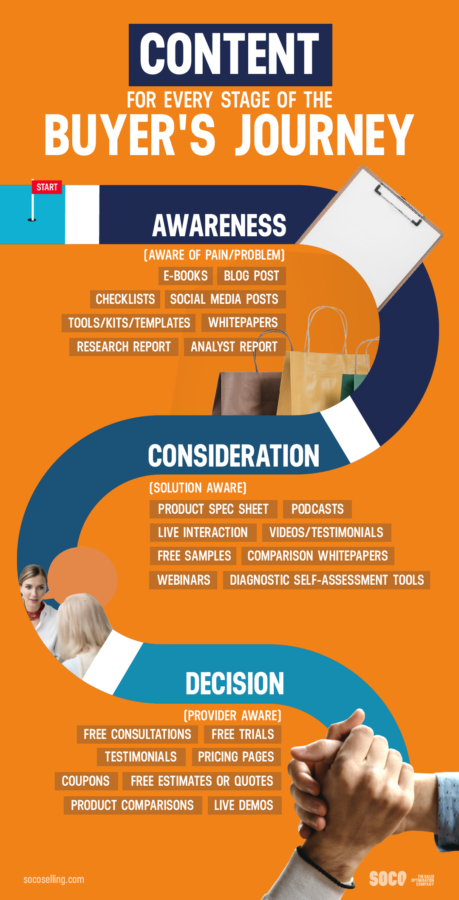
If you didn’t know by now, content is everything when it comes to sales enablement. That’s because, on average, 41% of B2B buyers always read at least 3 pieces of content before contacting a salesperson. More so, while customers are busy researching the solution to their problems, 70% of these B2B buyers state that they find and digest content directly from a vendor’s website before buying.
So ultimately, you must create a wide range of content for your users. Otherwise, you’ll miss out. But, rather than aiming for sheer quantity, you should focus on quality content that’s interesting, useful, and original. Remember, the purpose of sales enablement content is to arm your sales team with the tools, data, and content they need to enhance their sales process while growing your brand recognition and authority.
Here are some of the best types of sales enablement to start creating today if you haven’t already:
Blog Posts
Blog posts are invaluable for every stage of the sales process. Especially considering they have a long shelf life when constructed well. However, they do not replace your sales team’s expert advice.
As such, you should perceive them as an additional tool that prospects and customers can access anywhere and anytime.
Overall, long-form blog posts are necessary for educating prospects. They are often crafted collaboratively by salespeople, product specialists, and technical service experts.
White Papers
White Papers are an excellent tool for early prospects to use as gated content. They’re deeply rooted in research, analysis, and statistics that are useful and easy to understand. Overall, they’re instrumental in advancing the prospect through the sales cycle.
Here are a few tips to accelerate the sales process using content:
- Include videos in product pages to help explain what the product is all about. More so, how it can find a solution for the customers’ pain points.
- Share content on social media platforms like LinkedIn, where many B2B decision-makers are actively present. It is also an easy way to increase brand recognition and pursue prospects.
Case Studies
Salespeople need reputable references to share with prospects, so Case Studies of past customers are essential and preferably in the format of video testimonials or written documents. Overall, they should outline the benefits customers will gain from using your company’s products and services.
For example, an ideal case study structure would be:
- Explain the customer’s particular challenge.
- Question how your team would have handled this situation.
- The positive result.
Social Media Posts
Social Media is a central communication tool for everyone around the globe. So if you share the right content with their connections (particularly long-form blog posts and videos), you’ll help prospects engage and understand your offering.
Final word: Go from top to bottom of the sales funnel with SOCO/®
Thanks to the ongoing effects of the pandemic, B2B buyers’ behavior is changing rapidly—a problem exacerbated by the growing need for virtual interactions and purchases.
As a result, running a productive and profitable sales department depends on having the right employees with the knowledge they need to do their jobs effectively. Members must continually update their selling skills to get the most from your sales team. With SOCO/’s B2B sales training, you can grow your company faster than you thought possible.

*https://blog.hubspot.com/service/customer-service-stats
